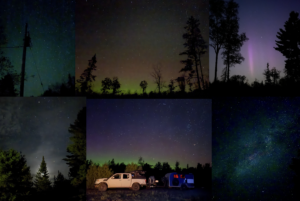
The night skies over northern Wisconsin and the upper peninsula of Michigan have been putting on quite a show these past few months, and I’ve found myself spending more and more evenings outside, looking up.
What started as a few photographs of the stars has turned into a fascinating little hobby. I’ve learned to recognize constellations, photographed the Milky Way and the distant Andromeda Galaxy, and spent several nights watching the northern horizon for signs of the aurora borealis.
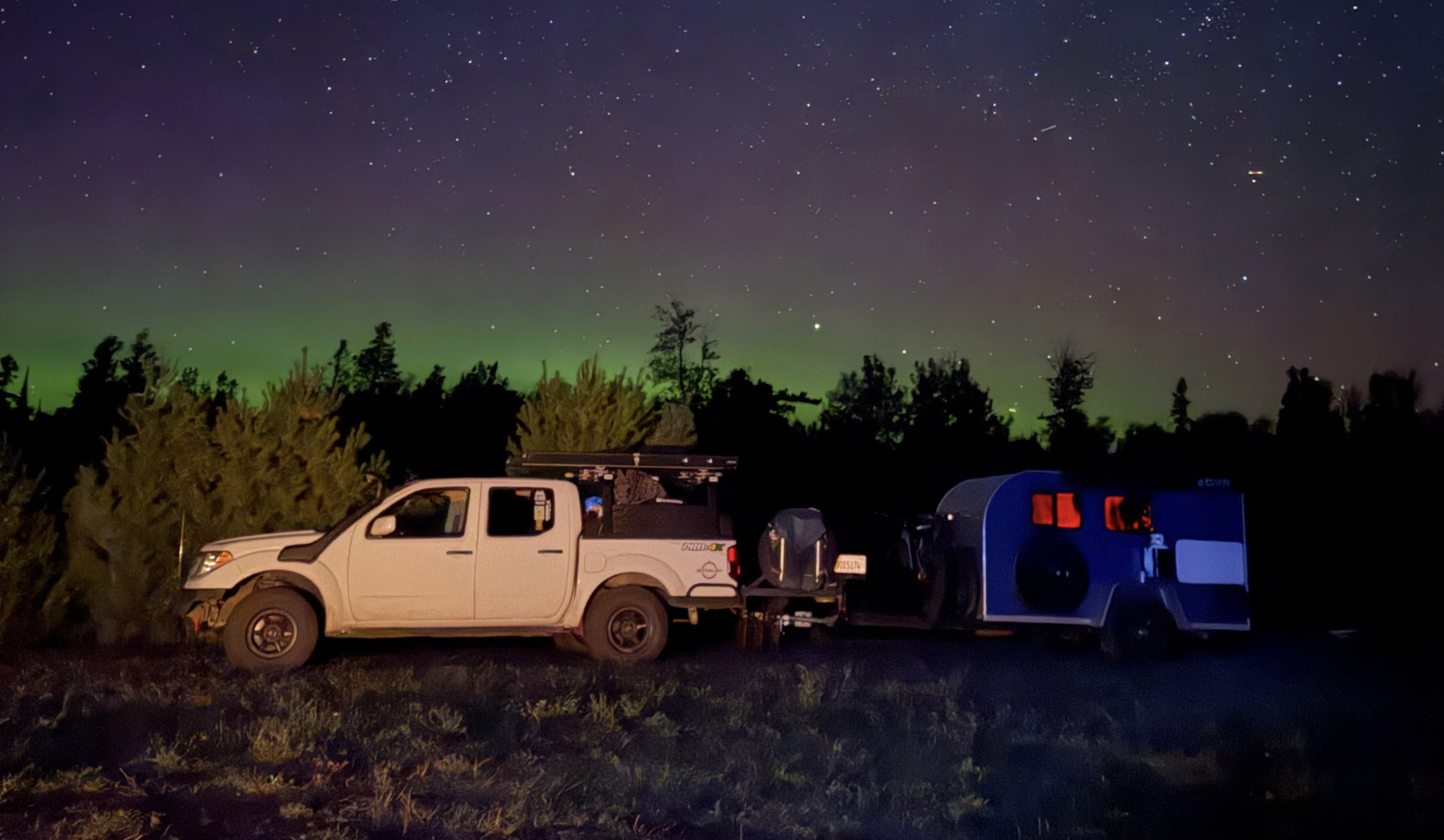
One of the most interesting discoveries has been just how much my phone’s camera can reveal that my eyes can’t. Faint green and reddish glows, barely noticeable in person, sometimes emerge as beautiful colors in long-exposure photographs. I’ve also learned that not every colorful sky is an aurora, and that getting familiar with what the sky normally looks like makes the unusual nights easier to recognize. My friend, Asa Lee Meadows mentioned that even if you can’t see the aurora, after years of successful hunting, you just know when to get the camera out.
Looking ahead- November brings the Taurid and Leonid meteor showers, along with the return of some familiar winter constellations. My favorite constellation may be Orion- I always felt sympathy for the main character in this Robert Frost poem, me scurrying around with fall chores I put off too long, late to put the garden to bed or raking leaves well into the dusky twilight-
THE STAR SPLITTER (Excerpt)
by Robert Frost“You know Orion always comes up sideways.
Throwing a leg up over our fence of mountains,
And rising on his hands, he looks in on me
Busy outdoors by lantern-light with something
I should have done by daylight, and indeed,
After the ground is frozen, I should have done
Before it froze, and a gust flings a handful
Of waste leaves at my smoky lantern chimney
To make fun of my way of doing things,…”
I would also swing the back door of our old home open late at night to let the dogs out and look up to see Orion up in the cold sky, leaving me with a sense of familiarity and comfortable routine.
December promises the Geminids, one of the year’s most impressive meteor showers, and longer nights mean more opportunities to enjoy it all, even if we have to bundle up a little more. For those of us who love exploring the outdoors, the adventure doesn’t have to end when the sun goes down. Sometimes the best show is happening right above our campsite.
In the November issue of Northology Adventures, I’ll share more of my nighttime photographs, what I’ve learned about identifying stars, galaxies, and northern lights, and a closer look at what’s happening in the November and December skies.
Until then, keep looking up!